Hiking with Dogs: Trail Tips and Safety Guide 2026
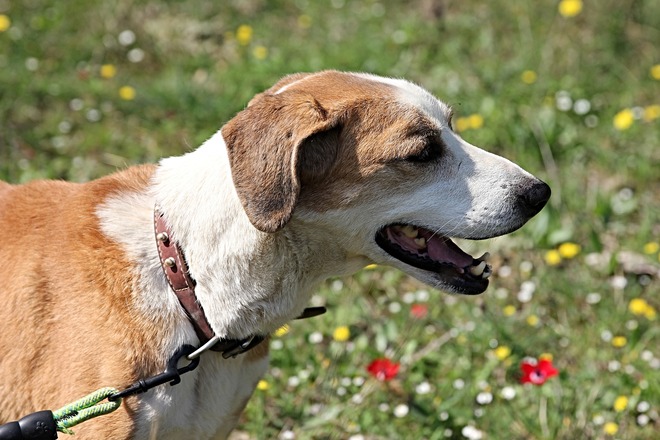
There’s something about stepping onto a trail with your dog that just feels right. The leash goes on, the tail starts wagging, and suddenly even a muddy, uphill path feels like the best idea you’ve ever had. Hiking with dogs is one of the most rewarding outdoor activities you and your pup can share — but it’s not as simple as clipping on a leash and heading into the woods.
If you want the adventure to go well for both of you, a little planning goes a long way. This guide covers everything you need to know: choosing dog-friendly trails, packing the right gear, keeping your dog safe, respecting other hikers, and making sure your four-legged companion actually enjoys the experience as much as you do.
Table of Contents
Why Hiking with Dogs Is One of the Best Things You Can Do Together
Most dogs are built for the outdoors. Their senses are sharpened by new smells, sounds, and textures that a backyard simply can’t offer. Hiking with dogs gives them a full-body workout and serious mental stimulation — the kind that actually tires them out in a good way.
For you, the benefits are just as real. Research consistently shows that spending time in nature reduces cortisol levels and lowers stress. Add your dog to the equation, and you’ve got a walking mood booster right there on the trail beside you.
There’s also the bonding piece. Time spent navigating new terrain, crossing streams, and discovering overlooks together builds a kind of trust that you don’t get from a walk around the block. Dogs who hike regularly with their owners tend to be calmer, more responsive, and better socialized overall.
That said, hiking with dogs does come with real responsibilities. Your dog can’t read a trail map or understand when they’re pushing too hard. That’s your job — and this guide will help you do it well.
How to Choose the Right Trail for Hiking with Dogs
Not every trail is a good fit for your dog. Before you go anywhere, do a little research. Here’s what to look for.
Check the Pet Policy First
This sounds obvious, but you’d be surprised how many hikers show up to a national park with their dog and discover pets aren’t allowed on most trails. National parks tend to have stricter rules than national forests or state parks. Always verify the specific trail’s policy before you load up the car.
Dog-friendly trails are out there in every region — you just need to know where to look. Apps like AllTrails let you filter specifically for pet-friendly routes.
Match the Trail to Your Dog’s Fitness Level
Hiking with dogs means hiking at their pace, not yours. A short-legged basset hound isn’t built for a 12-mile ridge scramble. A young border collie, on the other hand, might need a longer trail to burn off energy properly.
Think about your dog’s age, breed, and overall health. Puppies under a year old shouldn’t do long hikes because their joints are still developing. Senior dogs can still enjoy trails, but stick to flatter, shorter routes with soft ground. If your dog has had joint issues or recently recovered from an injury, check with your vet before hitting any trail.
Look at the Terrain
Rocky scrambles, steep elevation gain, and exposed ridgelines can be tough on paws. For most dogs, trails with moderate elevation and natural surfaces — dirt, grass, pine needles — are ideal starting points. As your dog builds trail fitness, you can work up to more technical terrain.
Essential Gear for Hiking with Dogs
Good gear makes hiking with dogs safer and more comfortable for everyone. You don’t need to spend a fortune, but there are a few items worth investing in.
A Sturdy, Well-Fitted Harness
A collar puts pressure on the throat when your dog pulls. A harness distributes that pressure across the chest and shoulders, which is much better for dogs on longer hikes. Look for one that fits snugly without restricting movement — you should be able to slide two fingers under any strap.
A Dog Pack (For Longer Hikes)
If your dog is large and healthy, they can carry their own gear. Dog packs are designed to sit evenly on both sides and shouldn’t exceed 25% of your dog’s body weight. Start with an empty pack so your dog gets used to wearing it, then gradually add weight over a few trail trips.
Dog Booties or Paw Wax
Hot pavement, sharp rocks, icy trails — all of these can damage paw pads fast. Dog booties take some getting used to (there will be a goofy walking phase), but they’re worth it for rough conditions. Paw wax is a good middle-ground option that protects without the drama.
A Collapsible Water Bowl
Hiking with dogs means carrying water for two. Dogs need roughly one ounce of water per pound of body weight on active days. A collapsible silicone bowl is lightweight and makes it easy to give your dog a drink wherever you stop.
A Hands-Free Leash
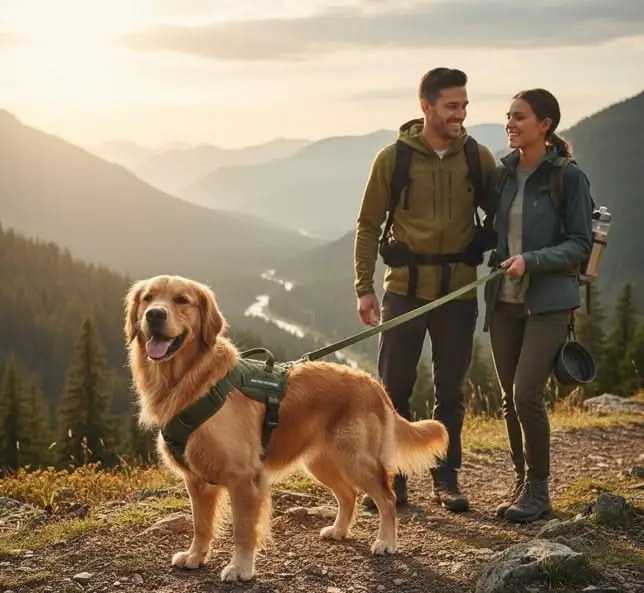
This is a game changer for long hikes. A hands-free leash clips around your waist and frees up your arms for trekking poles, scrambling, or just swinging naturally as you walk. It keeps your dog close without requiring you to grip a leash the whole time.
Dog First Aid Kit
Accidents happen on trails. Pack a basic kit that includes antiseptic wipes, gauze, vet wrap, tweezers for ticks, a digital thermometer, and any medications your dog takes regularly. It’s also smart to know the location of the nearest emergency vet to wherever you’re hiking.
Keeping Your Dog Safe on the Trail
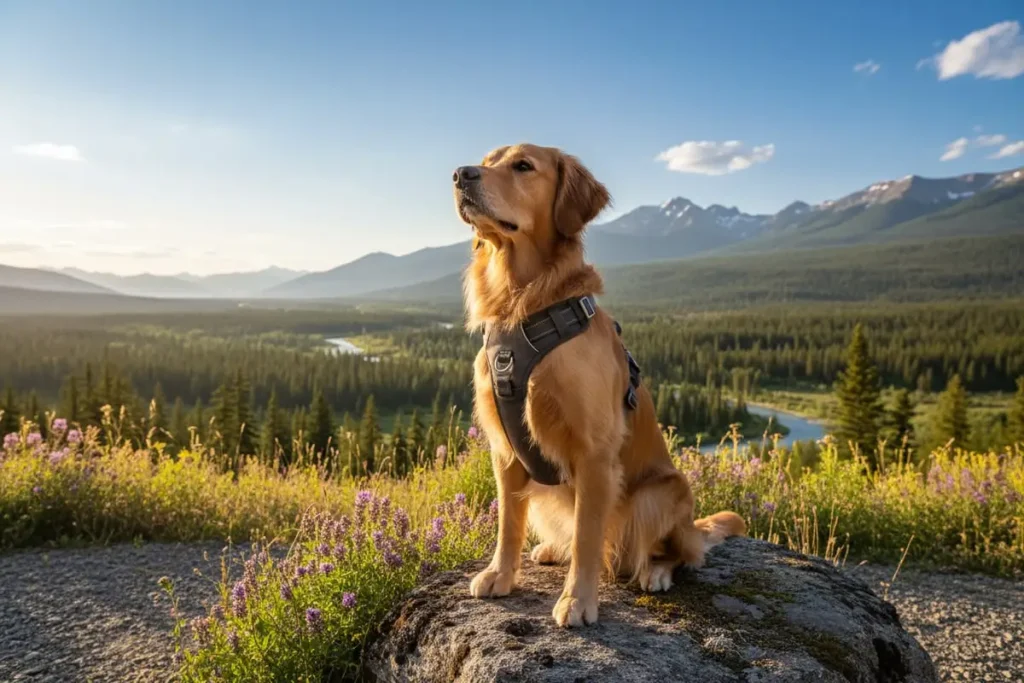
Safety is the heart of responsible hiking with dogs. A few habits can prevent most trail emergencies.
Hydration Matters More Than You Think
Dogs cool themselves through panting, which burns through water quickly. Stop and offer water every 20–30 minutes on warm days, and more often if your dog is working hard. Signs of dehydration include dry gums, excessive panting, and lethargy. If you notice any of these, find shade, offer water slowly, and head back to the trailhead.
Watch for Overheating
Heat exhaustion in dogs can escalate fast. Hiking with dog in hot weather requires careful timing — go early in the morning or late in the evening, and avoid midday sun. If your dog starts stumbling, drooling heavily, or seems disoriented, that’s an emergency. Cool them down with water on their paws and belly, and get to a vet as quickly as possible.
Keep Your Dog on a Leash Near Wildlife
Even well-trained dogs can bolt after a deer, squirrel, or rattlesnake. A dog off-leash near wildlife creates risks for the animal, your dog, and you. Many serious trail injuries happen when dogs chase wildlife and the owner follows without thinking. Keep the leash on in areas known for wildlife activity — it’s the safer call every time.
Check for Ticks After Every Hike
Ticks love tall grass and brush — exactly the kind of terrain you’ll hike through. After hiking with dogs, do a full-body tick check on both you and your pup. Pay close attention to the ears, between the toes, around the collar, and in the groin area. Use a tick removal tool if you find one attached, and monitor for any symptoms of illness in the days that follow.
Know the Toxic Plants
Certain plants can make dogs seriously ill. Mushrooms, foxtail grass, sago palm, and some wild berries are dangerous if ingested. Train your dog to leave plants alone on the trail, and if you see them sniffing around unfamiliar vegetation, redirect them immediately.
Trail Etiquette When Hiking with Dogs
Hiking with dogs is a shared experience — not just between you and your dog, but with every other person on the trail. Good manners go a long way.
Leash Laws Exist for Good Reason
Even on trails where dogs are allowed off-leash, it’s your job to read the situation. If someone approaches who looks nervous around dogs, leash up. If there are children on the trail, leash up. Not everyone loves dogs, and that’s okay — it’s the trail, not your backyard.
Yield to Other Trail Users
The general rule: hikers yield to equestrians, and cyclists yield to hikers. When you encounter horses while hiking with dogs, move your dog to the downhill side of the trail, keep them calm and close, and let the horses pass. Horses can spook easily, and a dog lunging in their direction can create a dangerous situation fast.
Pack Out All Waste
There’s no polite way to say this: pick up your dog’s poop. Every single time. Leave it on the trail and you’re fouling water sources, spreading bacteria, and being a bad ambassador for everyone who hikes with dogs. Carry biodegradable waste bags, and if you’re deep in the backcountry, follow the same rules you would for human waste — pack it out or bury it well off the trail.
Don’t Let Your Dog Approach Other Dogs Without Permission
Just because your dog is friendly doesn’t mean every dog on the trail is. Always ask before allowing your dog to greet another. A quick “Is your dog okay with other dogs?” saves everyone from a tense situation.
What to Pack for a Full Day of Hiking with Dogs
Here’s a quick packing checklist for a full day on the trail:
- Water: At least 8 oz per hour of hiking, per dog
- Food or trail snacks: High-protein treats work great on the trail
- Collapsible bowl: Lightweight and essential
- Leash and backup leash: Always carry a spare
- Harness: Properly fitted before you leave home
- Dog first aid kit: Including tick removal tool
- Poop bags: More than you think you’ll need
- Dog booties or paw wax: Especially for rocky or hot terrain
- Identification: Tags, microchip info, and a photo of your dog on your phone
- Any medications: Including flea, tick, and heartworm prevention
- Small towel: For drying off after water crossings
Dog-Friendly Hiking Tips for First-Timers
If this is your first time hiking with dogs, start small. Pick a short, well-marked trail — two to three miles max — on a mild weather day. See how your dog handles it before committing to anything more ambitious.
Let your dog set the pace on the first few hikes. Some dogs are instantly at home on the trail. Others take a little time to figure out what’s expected of them. Be patient and keep the energy positive.
Practice basic commands before hitting a challenging trail. “Leave it,” “come,” and “heel” are especially useful when hiking with dogs through areas with wildlife, other hikers, or unpredictable terrain.
Bring high-value treats. Recall is everything on a trail, and a treat that your dog goes crazy for makes training out there much more effective.
After the Hike: Taking Care of Your Dog
The hike doesn’t end when you get back to the car. A few post-trail habits protect your dog’s health and keep them trail-ready for next time.
Rinse their paws. Trails can leave behind dirt, allergens, salt, and toxic residues. A quick rinse with clean water prevents your dog from licking harmful substances off their paws at home.
Check their coat and skin. Look for burrs, cuts, splinters, or signs of irritation. Check between the toes carefully — that’s where foxtail seeds tend to hide, and they can burrow into tissue if left unnoticed.
Give them time to rest. A good hike is genuinely tiring. Let your dog sleep, and make sure they have fresh water and a comfortable place to recover.
Monitor them for 24–48 hours. Watch for limping, changes in appetite, excessive scratching, or unusual behavior. Some trail-related issues — like tick-borne illness or paw injuries — don’t show up right away.
Dog Park Etiquette: Rules for Safe Social Play
Frequently Asked Questions About Hiking with Dogs
How far can a dog hike in a day? Most healthy adult dogs can handle 5 to 10 miles comfortably, depending on the terrain and temperature. Working breeds like labs, shepherds, and huskies can often go further. Always let your dog’s behavior guide you.
Can I hike with my puppy? Short, easy hikes are fine for puppies, but avoid long distances or steep terrain until they’re at least 12–18 months old. Growing joints need protection.
What’s the best breed for hiking with dogs? High-energy working breeds tend to do best — Australian shepherds, Vizslas, Weimaraners, and Siberian huskies are natural trail dogs. That said, any healthy, conditioned dog can enjoy hiking. It’s more about fitness than breed.
What should I do if my dog gets injured on the trail? Stay calm. Assess the injury — is it something you can manage with your first aid kit, or does it require immediate vet attention? For serious injuries, carry your dog if possible and get to the trailhead as quickly as you safely can.
The Trail Is Better with Your Dog
Honestly, there’s a reason hiking with dogs has become one of the most popular outdoor activities in the country. Dogs bring something to the trail that nothing else does — pure, uncomplicated joy. They don’t care about the elevation gain or how long it takes to reach the summit. They’re just happy to be out there with you.
Take care of them the way they’d take care of you if they could. Pack the right gear, choose trails that suit their abilities, respect the rules, and pay attention to how they’re feeling out there. Do that, and hiking with dogs won’t just be an activity — it’ll be one of the best parts of your week.
Now go find a trail. Your dog is already waiting by the door.













Post Comment