Dog Park Etiquette: Rules for Safe Social Play
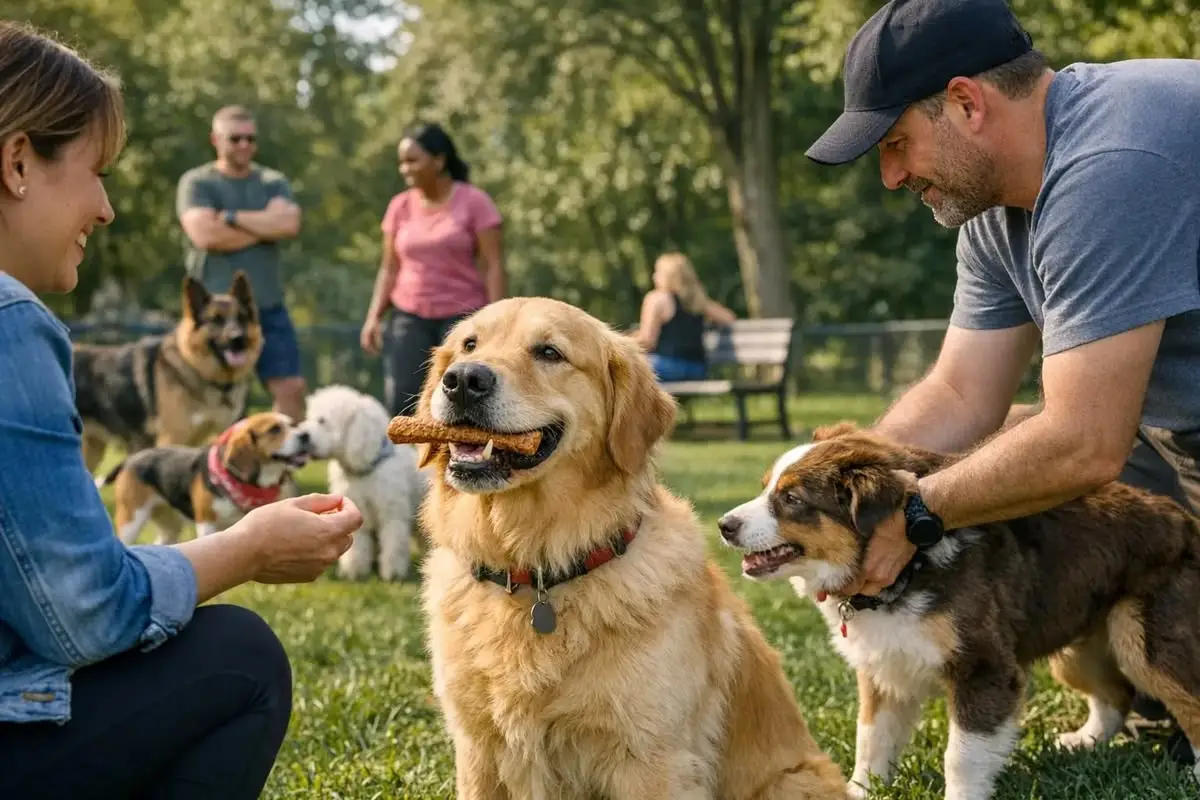
You finally found a great off-leash dog area nearby. Your dog is losing her mind with excitement in the back seat, nose pressed against the window, tail going like a helicopter blade. You pull into the parking lot — and then it happens. Some guy lets his massive, over-amped Lab barrel straight into your dog the second the gate closes, no warning, no apology. His dog knocks yours off her feet. He just shrugs and says, “Oh, he’s friendly.”
Yeah. That’s the moment you realize not everyone got the memo.
Good dog park etiquette isn’t complicated. But it does take a little awareness, a little humility, and a willingness, actually, to pay attention while you’re there. If more people did that, dog parks would be the joyful, easy-going spaces they’re supposed to be. So let’s talk about what that actually looks like — the real stuff, not just the laminated rules sign at the entrance.
Table of Contents: Dog Park Etiquette
Why Dog Park Etiquette Matters More Than You Think
Dog parks are a genuinely great thing for dogs and their owners alike. They give high-energy dogs a chance to run freely, practice social skills, and burn off steam in a way that a leashed neighborhood walk just can’t match. For owners, they’re a chance to connect with a community of people who get it — who understand why you’ve spent more on dog food this month than groceries.
But here’s the thing: a dog park only works as well as the people in it. When someone ignores basic dog park etiquette, the whole environment shifts. Dogs pick up on tension. They react to chaos. One out-of-control situation can set off a chain reaction that leaves multiple dogs — and owners — stressed out or worse, injured.
Proper dog park etiquette isn’t about being uptight or policing everyone else’s fun. It’s about shared responsibility. It’s about recognizing that your dog’s behavior is your job to manage, and that the park belongs to everyone there. When people take that seriously, the energy inside the fence is completely different — calmer, more playful, genuinely enjoyable.
Before You Go: Know the Dog Park Etiquette Rules
Every dog park has its own posted rules, and they’re worth reading before your first visit — not skimming, actually reading. Common dog park rules include age minimums for dogs (often four months old, since puppies need to be fully vaccinated), prohibitions on bringing dogs in heat, and separate enclosures for small and large dogs.
Beyond the official list, there are some basics that apply just about everywhere.
Your dog should be up to date on vaccinations. This isn’t just a rule — it’s basic decency to the other dogs and owners sharing that space. Distemper, rabies, Bordetella (kennel cough) — make sure your vet has signed off before you go.
Know your dog’s triggers. Some dogs are fine in groups of two or three but get overwhelmed when it’s a crowded park. Some love other dogs but hate kids running by. If your dog has known stress points, factor them in before heading out. Dog park etiquette starts long before you get there.
Check the park first. A quick scan through the fence before entering tells you a lot. Is it crowded? Are there multiple large dogs in a frenzy near the gate? Are owners actually watching their dogs? If anything feels off, it’s completely reasonable to turn around and come back another time.
What to Bring (and What to Leave at Home)
Packing for a dog park trip is simple, but there are a few things most new visitors miss.
Bring water and a portable bowl. Many parks have water stations, but they’re not always clean or reliable. Keeping your dog hydrated — especially in summer — is non-negotiable.
Bring poop bags and actually use them. This is non-negotiable and maybe the single most visible part of dog park etiquette. Nobody wants to step in it. Nobody wants their dog rolling in it. Just pick it up. Every time. Even when you think nobody’s watching. Especially then.
Leave treats at home, or keep them completely out of sight. Food at a dog park is a recipe for resource guarding and unexpected aggression. Even a dog that has never shown food aggression in their life can react differently when they’re already in a heightened, stimulated state and suddenly smell treats nearby.
Leave the retractable leash in the car, too. In an off-leash area, retractable leashes create tangling hazards and make it harder to maintain control during the transition in and out of the gate.
Dog Park Etiquette Do’s: The Right Way to Enjoy Off-Leash Time
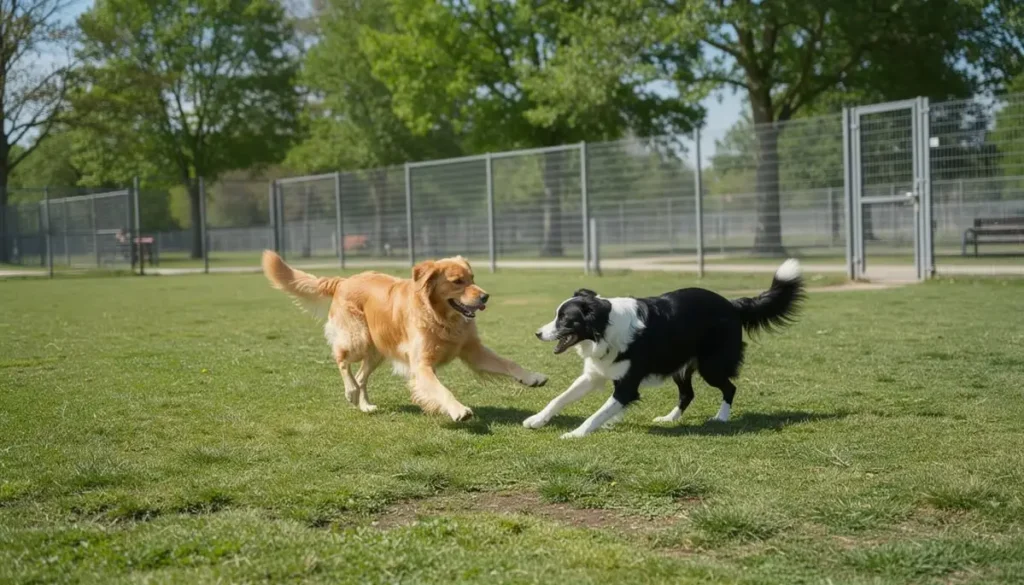
Do watch your dog the whole time. This is the big one. Your dog is your responsibility, not the park’s. Not everyone else’s. Yours. That means you’re not scrolling Instagram or getting deep into a conversation while your dog is doing something sketchy on the other side of the park. Attention is the foundation of good dog park etiquette.
Do step in early. If play starts looking a little rough, redirect your dog before it escalates. Call them over, ask them to sit, do a quick check-in. You don’t need to be a buzzkill — just be aware. Catching something early is always easier than managing an actual incident.
Do learn basic dog body language. You don’t need a certification in canine behavior, but understanding the difference between happy play and stressed, anxious behavior changes everything. A play bow (front end down, rear end up, tail wagging) is a great sign. Stiff body posture, a tucked tail, whale eye (where you can see the whites of a dog’s eyes), or excessive lip-licking are signs that a dog is uncomfortable.
Do be honest about your dog’s social skills. If your dog is still figuring out how to interact politely with other dogs, start with quieter times when the park isn’t packed. Set them up to succeed.
Do leave when your dog has had enough. Dogs get tired and overstimulated. When that happens, their behavior usually deteriorates. An overstimulated dog is much more likely to snap, mount, or get reactive. Read your dog’s signals and head out before things get to that point.
Dog Park Don’ts: Mistakes That Create Real Problems
Don’t bring a Dog Park Etiquette in heat. This one is simple. It creates tension, triggers mounting behaviors, and can lead to fights among male dogs. Just skip the park while your dog is in season.
Don’t allow excessive mounting. A little humping happens. It’s a social behavior, not just a sexual one. But when a dog is relentlessly mounting another who clearly wants nothing to do with it, that’s a problem. Step in and redirect your dog. Other owners will thank you silently, even if they’re too polite to say anything.
Don’t let your dog bully smaller dogs. Some larger dogs have no concept of their own size. They’ll play just as rough with a ten-pound Chihuahua as they would with a Labrador, and it can quickly become terrifying for a small dog. Dog park etiquette means knowing your dog’s play style and making sure it’s appropriate for whoever they’re playing with.
Don’t bring small children into the large dog area. Kids and large packs of amped-up dogs are a risky combination, even with well-behaved dogs. Use the small dog area if it’s available, or save the park visit for a time when the kids stay home.
Don’t hover obsessively — but also don’t disappear. There’s a balance. Following your dog around and narrating their every move makes it hard for them to interact naturally. But tuning out entirely is equally irresponsible. Find a spot where you can watch the whole space comfortably and stay present.
Reading Dog Park Etiquette Body Language: What the Park Is Actually Telling You
Understanding how dogs communicate with each other is one of the most underrated parts of dog park etiquette. Most dog park incidents don’t come out of nowhere — there are usually several warning signs that got missed or ignored.
Signs of happy, relaxed play:
- Loose, wiggly body movement
- Open mouth, “smiling” expression
- Mutual taking of turns (chase goes both ways)
- Play bows
- Brief pauses that both dogs seem comfortable with
Signs that a dog is stressed or uncomfortable:
- Tail tucked low or between the legs
- Low, slow body posture (crouching)
- Yawning repeatedly when not tired
- Turning away or moving away from another dog
- Growling or showing teeth
Signs that play is escalating into something concerning:
- One dog consistently on top of the other with no reciprocation
- Snapping or biting that goes beyond a quick, light correction
- Loud, sustained barking paired with stiff body language
- A dog that keeps trying to leave but is being followed
If you notice these signs in your dog or any dog nearby, it’s time to calmly intervene. You don’t have to be dramatic about it — just step in, redirect, give the dogs a chance to reset.
What to Do If Dogs Fight
Even with good dog park etiquette all around, dog fights happen sometimes. Knowing how to respond calmly can make a big difference.
First, don’t panic and don’t grab a dog’s collar — that’s how people get accidentally bitten. Instead, make a loud noise, spray water if you have a bottle handy, or try to place a large object (like a bag or jacket) between the dogs.
Once the dogs are separated, check both of them for injuries. Exchange contact information with the other owner. Even if neither dog seems hurt, puncture wounds can be small and hard to spot in thick fur.
After a fight, take your dog home and let them decompress in a quiet space. A dog park is over for the day once something like that happens.
Here’s an honest truth: if your dog is frequently involved in altercations at the dog park, the dog park might not be the right setting for them right now. Some dogs just aren’t built for group off-leash play, and that’s completely okay. There are other ways to exercise and socialize a dog — it doesn’t make them (or you) a failure.
Dog Park Etiquette in the Small Dog Area
Most parks with both a large dog area and a small dog area have them separated for good reason. Small dogs can be seriously injured during rough play with much larger dogs, even when the larger dog has zero aggressive intent. It’s just physics.
If your dog is small, use the small dog section. Don’t assume your tiny dog is so confident and social that the large dog area is fine. Even if your Yorkie thinks they’re a German Shepherd, the other dogs don’t know that.
The same dog park etiquette rules apply in the small dog area — watch your dog, pick up waste, don’t bring treats, step in early if play gets rough. The smaller scale doesn’t change the fundamentals.
One thing that sometimes gets overlooked in small dog areas: small dog owners can be more likely to pick their dog up when things get tense. Picking up a small dog in a group setting can actually increase tension, as it raises the dog up to face level and can trigger jumping or nipping from other dogs. Unless your dog is in immediate danger, keeping them on the ground and redirecting is usually the better move.
Adult Dog Training: 3 Powerful Exercises That Build Real Control
Bringing a Puppy to the Dog Park
Puppies need socialization — that’s not up for debate. But the dog park isn’t always the best place to get it, especially for very young pups.
Before bringing a puppy, make sure they’re fully vaccinated. Puppies are significantly more vulnerable to illnesses like parvovirus, which can survive in the environment even after an infected dog is long gone.
Once your puppy is cleared by your vet, start with short visits during quieter times. A puppy that gets overwhelmed by chaotic group play can develop lasting anxiety about other dogs — the opposite of what you’re going for. A calm, positive first experience is worth more than a dozen stressful ones.
Watch your puppy closely. Look for signs of being overwhelmed: shaking, hiding behind your legs, trying to climb you, or freezing in place. Those are cues to step back, give your pup a break, and end on a calm note.
Good dog park etiquette when you have a puppy also means being upfront with other owners. “She’s eight months old and still learning” is a completely reasonable thing to say. Most experienced dog owners will actually appreciate the honesty and give your pup a little extra grace.
Frequently Asked Questions About Dog Park Etiquette
Q: Can I bring my dog to the park if they’ve shown aggression before? It depends on the nature and severity of the aggression. If your dog has a history of serious aggression toward other dogs, a crowded off-leash park is probably not the right setting — at least not yet. Work with a certified dog trainer to address the behavior first.
Q: What if another owner isn’t following the rules? This is genuinely tricky. Most people respond better to a calm, non-accusatory approach — something like, “Hey, I noticed our dogs are getting a little intense, mind if we give them a break?” If someone is being reckless or dismissive and the situation feels unsafe, leaving is always a valid choice. You can also report serious violations to the park’s managing organization.
Q: Is it okay to let dogs work out conflict on their own? Minor disagreements — a quick growl, a brief correction — are normal dog communication and often don’t need human intervention. Full-on fighting is never something to let “work itself out.” The middle ground takes judgment, and that’s where watching your dog closely pays off.
Q: How long should a dog park visit be? There’s no magic number, but 30 to 60 minutes is a reasonable range for most adult dogs. Watch your dog’s energy and behavior — when they start getting snappy, clingy, or disinterested, that’s usually a sign they’ve had enough.
Q: My dog just plays too rough. Should I still bring them? Work on it first. A trainer can help you teach your dog better impulse control and interrupt rough play before it escalates. Some dogs learn to read social cues better with practice; others may always need more managed socialization settings.
Final Thoughts
The best dog parks have an unspoken culture — a community of owners who actually look out for each other’s dogs, who call out problems without drama, who laugh off the ridiculous stuff and step in when it matters. That culture doesn’t happen automatically. It’s built by people who take good dog park etiquette seriously, even when no one’s watching.
You don’t have to be the park monitor. You don’t have to lecture strangers or memorize a rulebook. You just have to show up with your eyes open, keep your dog in check, clean up after them, and treat the space like it belongs to everyone — because it does.
Your dog is lucky to have someone who cares enough to do this right. Now go have a good run.







Post Comment