Dog Vaccination Schedule: Easy Complete Guide by Age

Why Vaccines Matter More Than You Think
Table of Contents
Dog Vaccination Schedule Think of vaccines as your dog’s invisible armor. When a dog gets vaccinated, their immune system learns to recognize and fight off specific diseases before those diseases ever show up. It’s preventive medicine at its best.
Skipping vaccines isn’t just risky for your dog it can also put other pets and, in some cases, even people at risk. Rabies, for example, is a disease that crosses species lines.
That’s why following a proper dog vaccination schedule isn’t just a personal choice it’s a community responsibility.
Dogs that stay unvaccinated don’t just put themselves in danger. They become potential carriers in shared spaces like dog parks, boarding facilities, and neighborhood sidewalks. The ripple effect of one unvaccinated dog can be wider than most people realize.
Puppy Vaccinations: Where It All Starts
If you just brought home a puppy, you’re probably already scheduling vet visits left and right. Good. Because the first few months of a puppy’s life are absolutely critical for building immune protection.
Puppies are born with some temporary immunity passed down from their mothers through milk. But that maternal immunity fades usually somewhere between 6 and 16 weeks and that’s when your vet steps in.
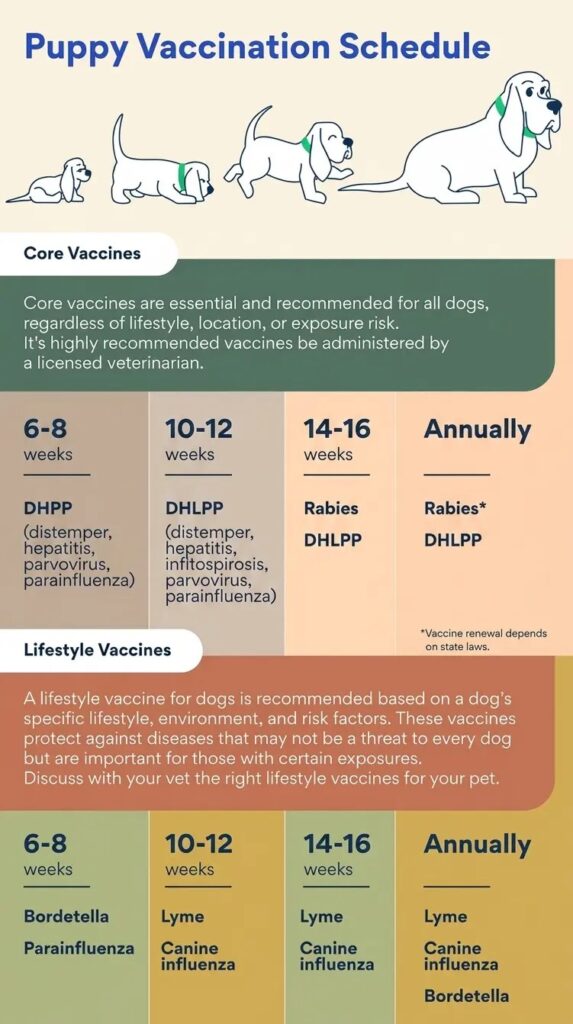
Here’s a general dog vaccination schedule for puppies:
6 to 8 Weeks:
DHPP (Distemper, Hepatitis, Parainfluenza, Parvovirus) first dose
Bordetella (kennel cough) often recommended at this stage too
10 to 12 Weeks:
DHPP second dose
Leptospirosis first dose
Bordetella booster (if first dose was given at 6–8 weeks)
14 to 16 Weeks:
DHPP third dose
Rabies first dose (legally required in most states and countries)
Leptospirosis second dose
12 to 16 Months:
DHPP booster
Rabies booster
Lyme disease vaccine (if your dog is at environmental risk)
This timeline isn’t one-size-fits-all, though. Your vet may adjust things based on where you live, your dog’s lifestyle, and any underlying health conditions. A dog that spends weekends hiking through tall grass needs different considerations than one who rarely leaves your backyard.
Core vs. Non-Core Vaccines What’s the Difference?
Not all vaccines are created equal. Vets divide them into two clear categories: core and non-core.
Core vaccines are the ones every dog should get, no matter what. They protect against diseases that are highly contagious, severe, or like rabies transmissible to humans. The dog vaccination schedule for core vaccines typically includes:
Distemper
Parvovirus
Hepatitis (Adenovirus)
Rabies
These are non-negotiable. They’re usually bundled into the DHPP combo shot, which makes staying current both easier and more affordable.
Non-core vaccines are recommended based on your dog’s environment and lifestyle. If your dog goes to dog parks, boarding facilities, or spends time in wooded areas, your vet might add:
Bordetella (kennel cough)
Leptospirosis
Lyme disease
Canine influenza (dog flu)
Having a real conversation with your vet about your dog’s specific exposure risks is the best way to build a dog vaccination schedule that actually fits your life not just some generic online chart.
Adult Dog Vaccination Schedule
Once your puppy has completed the initial round of shots, the dog vaccination schedule shifts into maintenance mode. Adult dogs don’t need vaccines as frequently, but they absolutely still need regular boosters to stay protected.
Here’s what a typical adult dog vaccination schedule looks like:
Every Year:
Bordetella
Leptospirosis
Canine influenza (if applicable)
Lyme disease (if in a tick-prone area)
Every Three Years:
DHPP booster
Rabies booster (laws vary by location some require annual rabies vaccines)
Spread out over three years, it’s really just one or two vet visits per year. That’s completely manageable and it makes a massive difference to your dog’s long-term quality of life.
Senior Dogs Still Need Vaccines
A lot of pet owners assume that once a dog gets older, vaccines become less important. That thinking is actually backwards. Older dogs often have weakened immune systems, which makes them more vulnerable to illness not less.
That said, the dog vaccination schedule for senior dogs may look a little different from what you’d see in younger years. Vets sometimes scale back non-core vaccines for older or immune-compromised dogs to avoid putting unnecessary strain on the body. But core vaccines especially rabies are usually maintained throughout a dog’s life.
If your dog is 8 years old or older, have a genuine conversation with your vet about what’s appropriate. Ask about titer tests, which measure your dog’s existing immunity levels before automatically giving another booster. This approach is gaining popularity, and for good reason why give a shot if the dog is already fully protected?
What Is a Titer Test?
A titer test is a blood test that measures the level of antibodies circulating in your dog’s system. Think of it as a way to check whether your dog’s immune system is still prepared to fight off specific diseases.
Some vets and pet owners use titer testing as part of their dog vaccination schedule to avoid over-vaccination especially for core vaccines like distemper and parvovirus. If the titer results show strong immunity, you may be able to skip a booster that year without any concern.
It’s worth knowing that titer tests aren’t always cheaper than vaccines, and they’re not universally accepted. Some boarding facilities and groomers still require proof of vaccination, not titer results. But for dogs with vaccination sensitivities or chronic health conditions, it’s a genuinely worthwhile option to explore with your vet.
Vaccine Side Effects: What’s Normal, What’s Not
No medical treatment is completely without risk. Vaccines are safe and life-saving, but they can come with mild side effects. Knowing what to expect saves a lot of unnecessary worry.
Normal side effects after a dog vaccination schedule appointment include:
Mild soreness at the injection site
Low energy for 24 to 48 hours
Slight fever
Reduced appetite
These typically resolve on their own within a day or two. Let your dog rest, offer plenty of fresh water, and skip roughhousing or long walks that same day.
Signs that something’s wrong call your vet immediately if you notice:
Facial swelling or hives
Vomiting or diarrhea
Difficulty breathing
Collapse or extreme weakness
Seizures
Severe allergic reactions to vaccines are rare, but they do happen. Most vets recommend waiting 15 to 30 minutes after vaccination before leaving just in case.
How to Keep Track of Your Dog’s Vaccinations
Organization matters more than people realize. Losing track of your dog’s vaccine history creates real problems especially when boarding, enrolling in training classes, or crossing state lines.
A few ways to stay on top of your dog vaccination schedule:
Keep physical records. Your vet should give you a vaccination certificate after every visit. Keep these in a folder dedicated entirely to your pet. Old school, but reliable.
Use a pet health app. Apps like PetDesk or your vet’s own patient portal can send automatic reminders and store your dog’s medical history digitally. This is especially helpful if you have multiple pets.
Ask your vet for a printed dog vaccination schedule. A good vet will happily give you a roadmap of what your dog needs and when no guesswork involved.
Set calendar reminders. Add vaccine due dates directly into your phone calendar. It takes five minutes and prevents accidentally lapsing on important boosters.
What Happens If You Miss a Vaccine?
Life happens. Sometimes you forget, or money gets tight, or you move and the paperwork gets lost. If your dog’s vaccines lapse, don’t panic but don’t wait, either.
The good news is that most adult dogs who’ve previously been vaccinated don’t need to restart the series from scratch. Your vet can assess where your dog stands and get them back on a proper dog vaccination schedule relatively quickly.
For puppies who miss a dose in the initial series, timing is more critical. The window for building strong immunity is narrow during puppyhood, so getting back on track as soon as possible really does matter.
Vaccines and the Law
Here’s something that catches people off guard: rabies vaccination isn’t just a health recommendation it’s the law in most of the United States and many countries worldwide. Legal requirements vary by state and sometimes by county, so checking your local rules is genuinely important.
Some jurisdictions require annual rabies boosters. Others accept the three-year vaccine as sufficient. Make sure your dog vaccination schedule aligns with what’s legally required in your area because failing to vaccinate against rabies can result in fines, quarantine orders, or serious consequences if your dog bites someone.
Lifestyle Factors That Shape Your Dog’s Vaccine Needs
This is something a lot of generic guides skip over, but it really matters. Your dog’s day-to-day lifestyle should directly shape the dog vaccination schedule your vet recommends.
High-exposure dogs those who frequent dog parks, boarding kennels, doggy daycare, or dog shows need more comprehensive vaccine coverage. Bordetella and canine influenza are especially important for social dogs who interact with many other animal.
Outdoor adventurers dogs that hike frequently, swim in natural water sources, or spend time in wooded areas face higher risks of leptospirosis and Lyme disease. These non-core vaccines become much more relevant for this group.
Indoor homebodies dogs that rarely interact with other animals and stay mostly inside may be able to skip certain non-core vaccines after a conversation with their vet.
The best dog vaccination schedule is one that’s personalized to your dog’s actual life not just pulled from a generic internet chart and applied without thought.
The Real Cost of Keeping Up With Vaccines
Let’s talk money, because it’s a genuine concern for many pet owners. The reassuring truth is that vaccines are one of the most cost-effective things you can do for your dog.
A typical core vaccine appointment might cost anywhere from $20 to $150, depending on your location and the number of vaccines given.
The dog vaccination schedule for puppies involves more frequent visits upfront, which can add up but it’s an investment that prevents far more expensive illnesses down the road. Treating parvovirus, for instance, can easily cost thousands of dollars in emergency care.
Low-cost clinics, humane societies, and mobile vet units often offer discounted vaccination services. If budget is a concern, look for these options in your area your dog’s health shouldn’t ever feel like a luxury.
Common Myths About Dog Vaccines
There’s a lot of misinformation circling the internet. Let’s clear up a few of the most persistent myths:
Myth 1: “Indoor dogs don’t need vaccines.”
Wrong. Even indoor dogs can be exposed to diseases through contact with other animals, contaminated surfaces brought in on shoes and clothing, or even through open windows. Sticking to a dog vaccination schedule is important regardless of how sheltered a dog’s lifestyle is.
Myth 2: “Vaccines cause the disease they’re supposed to prevent.”
This is false. Vaccines use killed or modified versions of viruses that cannot cause the actual disease. Your dog might feel slightly off for a day or two that’s the immune system activating, not an infection taking hold.
Myth 3: “Once vaccinated, dogs are protected forever.”
Immunity from vaccines does fade over time. That’s precisely why boosters exist, and why staying consistent with your dog vaccination schedule is so important throughout a dog’s life.
Myth 4: “Natural immunity is better than vaccine-induced immunity.”
Getting a disease to build immunity means your dog has to survive that disease first which is never guaranteed. Vaccines build the same protection without the life-threatening risk.
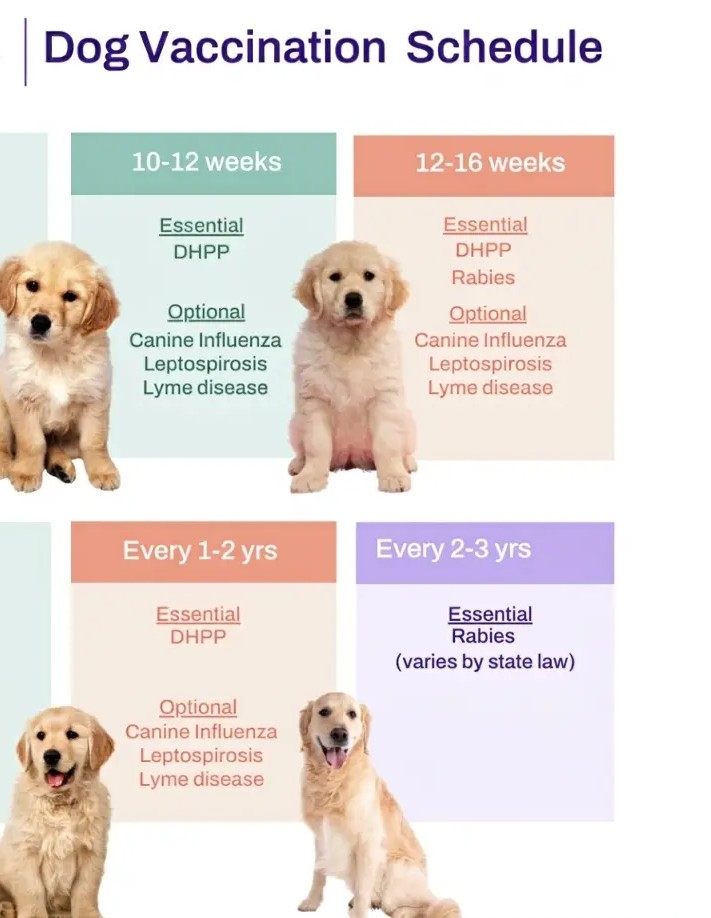
Quick Reference: Dog Vaccination Schedule at a Glance
Age / StageVaccines Recommended6–8 weeksDHPP (first dose), Bordetella10–12 weeksDHPP (second dose), Leptospirosis (first dose)14–16 weeksDHPP (third dose), Rabies, Leptospirosis booster12–16 monthsAll boosters (DHPP, Rabies, Leptospirosis)Adult yearlyBordetella, Leptospirosis, Lyme, InfluenzaAdult every 3 yrsDHPP booster, Rabies boosterSenior dogs (8+)Core vaccines maintained; discuss others with vet
Bringing It All Together
If you’ve made it this far, you already know more than most pet owners about canine vaccines. And honestly, that matters because the dog vaccination schedule you build and maintain today has a direct impact on the quality and length of your dog’s life.
It’s not about being a perfect pet parent. It’s about showing up consistently, asking the right questions, and working with a vet you trust to build a plan that genuinely works for your dog’s individual needs.
Start early. Stay consistent. Keep records. And when in doubt, pick up the phone and call your vet that’s exactly what they’re there for.
Your dog trusts you completely. They can’t advocate for their own healthcare. That’s your role. And thankfully, it doesn’t take much a consistent dog vaccination schedule, a vet you believe in, and a little bit of organization is all it takes to give your dog the long, healthy life they deserve.
So make that appointment. Keep those records updated. And give your pup a well-earned scratch behind the ears they’re lucky to have you looking out for them.
People also ask
What is the recommended vaccine schedule for dogs?
Puppy vaccinations typically begin at 6–8 weeks, with boosters every 3–4 weeks until 16–20 weeks old, including core vaccines (DHPP, Rabies) and lifestyle-dependent non-core shots (Bordetella, Lyme, Lepto). Adult dogs require boosters for core vaccines every 1–3 years, while non-core vaccines are usually recommended annually.
What is the 7 in all vaccine for dogs?
A 7-in-1 (7-way) dog vaccine is a combination shot that protects against seven common and serious canine diseases in one dose, typically covering Canine Distemper, Adenovirus Type 1 & 2 (Hepatitis/Respiratory), Parainfluenza, Parvovirus, and strains of Leptospirosis. It is widely used to prevent multiple infections, often starting in puppies around 6-8 weeks old, with boosters and annual revaccination recommended.
How many times do I need to vaccinate my dog?
Puppies require a series of vaccinations between 6 and 16 weeks old, followed by a booster at one year. Adult dogs generally receive core vaccines (Rabies, DHPP) every 1–3 years and non-core vaccines (like Bordetella or Lyme) annually, based on lifestyle risk and local regulations.
How many months to vaccinate a dog?
To provide the best protection against disease during the first few months of life, your veterinarian will recommend a series of vaccinations starting at 6-8 weeks of age. For most puppies and kittens, the final vaccination in the series is given at 16 weeks of age or older.













Post Comment