Dog Sports: Complete Guide for Energetic Dogs
Introduction: Why Dog Sports Are Changing the Way We Live With Our Dogs
If you’ve ever watched a Border Collie tear through an agility course like it was born for it, and honestly, it probably was, you already have a sense of what dog sport are all about. It’s not just competition. It’s a connection. It’s watching your dog do something that lights them up from the inside out.
Dog sports have exploded in popularity over the last decade, and for good reason. More people are realizing that physical exercise alone isn’t enough for their dogs. Mental stimulation, a sense of purpose, and that special bond that only comes from working together, those things matter just as much. Dog sport deliver all of it at once.
Whether you have a high-energy working breed or a scrappy little terrier who refuses to sit still, there’s a dog sport out there built for your dog. This guide breaks down the most popular canine sports, explains the benefits backed by both science and common sense, and gives you a real starting point, no fluff, no filler.
Table of Contents
What Are Dog Sports, Exactly?
At their core, dog sports are structured activities where dogs and their handlers compete or participate in specific skill-based challenges. Some dog sport are ancient; herding trials have been around for centuries. Others, like dock diving and scent work competitions, are relatively new. But they all share the same DNA: they’re built around what dogs were made to do.
Dog sport typically fall under a few categories:
- Performance sports: agility, flyball, disc dog, dock diving
- Working dog sport: herding, tracking, protection sports (like Schutzhund/IPO)
- Nose sports: scent work, nose work, tracking
- Endurance sports: canicross, bikejoring, dog sledding
- Companion sports: rally obedience, musical freestyle, trick dog
The American Kennel Club (AKC) sanctions dozens of dog sport events across the United States every year. Other organizations like the United States Dog Agility Association (USDAA), Dock Dogs, and the North American Dog Agility Council (NADAC) run their own competitive circuits, too. The dog sports world is bigger than most people realize.
The Real Benefits of Dog Sports (Beyond the Ribbons)
Physical Fitness for Dogs and Their People
This one’s obvious, but it goes deeper than most folks expect. Dog sports keep dogs lean, build muscle, improve cardiovascular health, and sharpen coordination. A dog who regularly trains for canine sports is typically healthier, lives longer, and visits the vet less often for weight-related issues.
Here’s what people don’t always talk about: dog sport are great exercise for you, too. Canicross, where you and your dog run together attached by a bungee line, is literally a workout. Agility handling burns real calories. You’re not just standing on the sidelines cheering.
Mental Stimulation That Actually Tires Them Out
Ever met a dog that destroyed the couch, dug up the yard, or barked for three hours straight? Nine times out of ten, that dog is bored. A thirty-minute game of fetch doesn’t cut it for a working breed. Dog sport engage a dog’s brain at a deep level, problem-solving, reading their handler, following sequences, and learning new tasks.
Scent work, for example, taps into a dog’s most powerful sense and gives it a real job to do. After a nose work session, most dogs are genuinely tired in a way that physical exercise alone doesn’t achieve. That’s the magic of dog sport.
Bonding That Goes Beyond the Leash
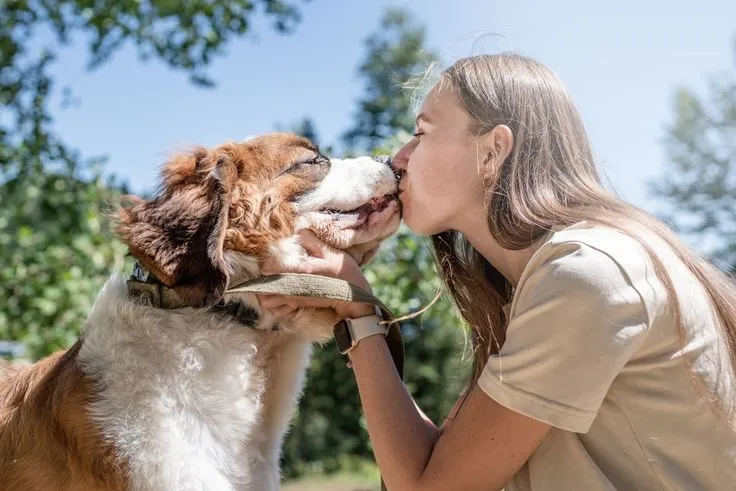
Honestly, this might be the biggest benefit of all. When you train for dog sports together, you develop a communication system that’s almost nonverbal. Your dog learns to read your body language. You learn to read theirs. You start to trust each other in a completely different way.
Handlers who compete in dog sport almost universally say the same thing: “My relationship with my dog completely changed.” It’s not hyperbole. It’s real.
The Most Popular Dog Sports, Explained
Dog Agility: The Crown Jewel of Canine Sports
Dog agility is probably the most recognized of all dog sports. In agility, a dog navigates an obstacle course, jumps, tunnels, weaves poles, A-frames, seesaws, guided entirely by their handler’s body language and verbal cues. No leash, no collar. Just communication and trust.
Dog agility competitions are timed and judged on both speed and accuracy. The handler runs alongside the dog, directing them through the course sequence. One wrong turn or a knocked bar costs you points. The fastest, cleanest run wins.
What makes dog agility so exciting is that it works for almost any breed. Sure, you see a lot of Border Collies and Shelties dominating the sport, but Labs, Papillons, mixed breeds, and even Bulldogs compete. The AKC’s agility program is one of the fastest-growing dog sports events in the country.
Getting started in dog agility doesn’t require fancy equipment. Many local dog training clubs offer beginner agility classes for under $20 a session. Start there.
Flyball: The Team Sport of the Dog World
If your dog is obsessed with tennis balls and loves to run, flyball might be your sport. Flyball is a relay race between two teams of four dogs. Each dog races down a lane, jumps over four hurdles, triggers a box that launches a tennis ball, catches it, then races back. The next dog goes when the first one crosses the start line.
It’s chaotic. It’s loud. It’s absolutely thrilling to watch, and dogs lose their minds for it.
Flyball is one of the few dog sports that’s inherently social. Dogs compete on teams, which means you’ll find a tight-knit community of passionate handlers wherever flyball events are held. For high-drive dogs that need an outlet, this canine sport is often a game-changer.
Dock Diving: Big Air, Big Fun
Dock diving, sometimes called dock jumping, is exactly what it sounds like. Dogs run down a dock and leap into a pool, competing for distance or height. It’s one of the most spectator-friendly dog sport out there because it’s visually dramatic and easy to understand.
Most dogs who love water take to dock diving naturally. Labrador Retrievers, Belgian Malinois, and mixed breeds all do well. But here’s the thing, the world record holders have included some surprising breeds. Dog sports have a way of proving everyone wrong about what dogs “can’t” do.
Dock diving events are held nationwide by organizations such as Dock Dogs and theAKC’s Dock Diving program. Entry fees are reasonable, the community is welcoming, and your dog basically gets to be a professional jumper. Not a bad life.
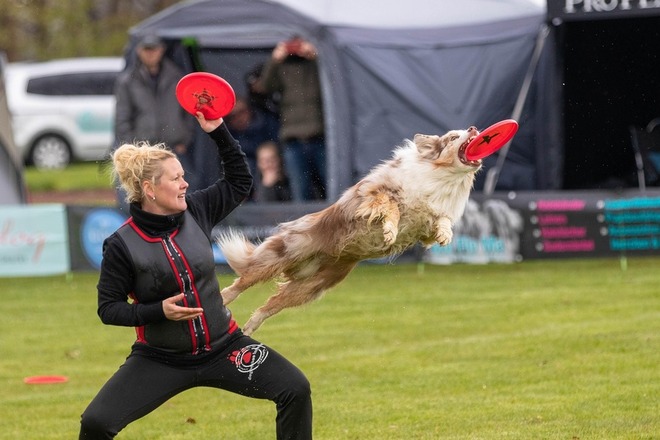
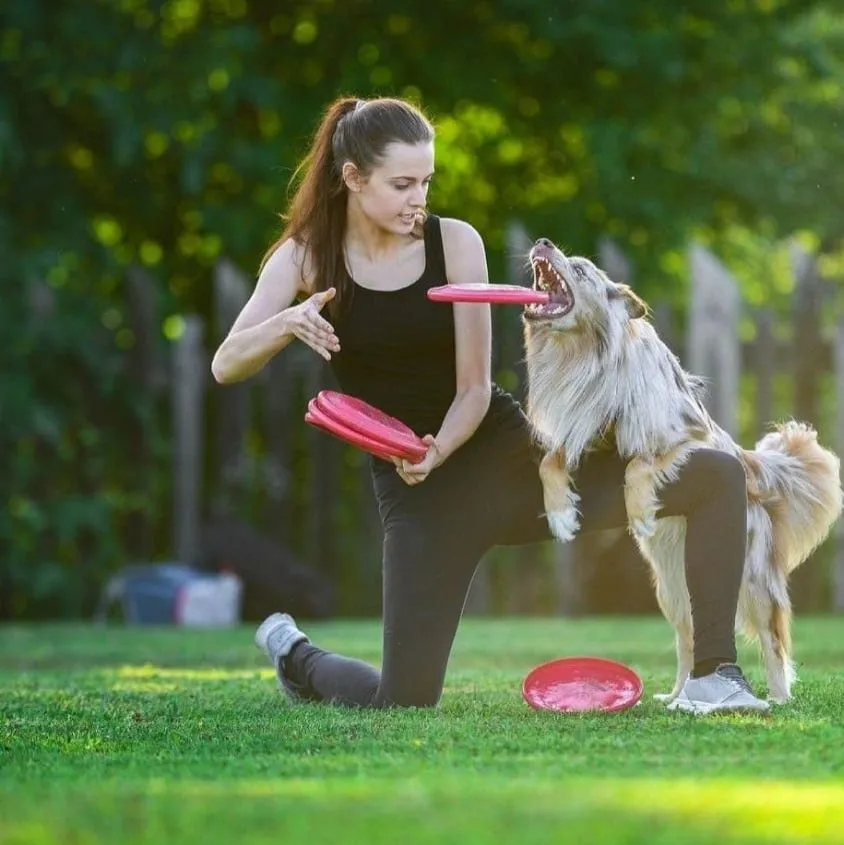
Disc Dog: The Art of the Flying Disc
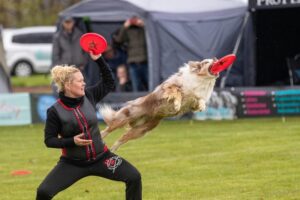
Disc dog, also called dog frisbee, combines athletic throwing with spectacular canine catches. In freestyle competition, handlers choreograph routines set to music, incorporating vaults, flips, and mid-air catches. In distance/accuracy events, it’s simpler: throw far, dog catches, repeat.
This canine sport rewards dogs with high prey drive and incredible athleticism. Handlers who compete at the top level of disc dog events have trained their dogs to jump off their backs, do flips, and catch discs thrown from 40+ yards. It’s jaw-dropping.
The beginner entry point is the lowest of any dog sport. All you need is a soft disc designed for dogs (never a hard plastic Frisbee, as they can injure a dog’s mouth) and a willing dog. Many people get hooked the first time their dog makes that first diving catch.
Scent Work and Nose Work: Unlocking Your Dog’s Superpower
Scent work is one of the fastest-growing dog sports in the country, and it deserves every bit of that growth. Modeled after detection dog training used by law enforcement, scent work competitions have dogs search for a specific odor hidden in various environments, vehicles, interiors, exteriors, containers.
The magic of nose work as a dog sport is that it’s accessible to almost every dog. Reactive dogs, older dogs, and dogs with physical limitations can all compete. The sport rewards what dogs are naturally brilliant at: using their nose. Handlers simply learn to read their dog’s body language to identify when they’ve found the source.
The National Association of Canine Scent Work (NACSW) and the AKC both offer nose work titling programs. It’s one of the most mentally demanding of all dog sports, and many dog owners report that even one session leaves their dog happily exhausted.
Herding Trials: The Original Dog Sport
Long before agility courses and flyball boxes existed, herding trials were how working dog breeds proved their worth. Herding trials test a dog’s natural ability to move livestock, sheep, ducks, or cattle through a series of obstacles and into a pen, guided by the handler at a distance.
Herding is not a sport you can fake. Either a dog has the instinct or it doesn’t. Breeds like Border Collies, Australian Shepherds, and Corgis were literally bred for this kind of work, and watching them herd is one of the most mesmerizing things in the entire dog sports world.
You don’t need a farm to try herding. Many herding trainers offer instinct tests on their own property, and there are herding clinics available around the country. It’s worth at least experiencing if you have a herding breed.
Canicross: Running With Your Dog, Reinvented
Canicross is a European import that’s been gaining serious traction in the U.S. It’s trail running with your dog, connected by an elastic bungee line that attaches to a specialized harness on the dog and a belt on the handler. The dog runs slightly ahead and pulls, adding speed and power to your run.
This canine sport rewards dogs with strong pulling drives and endurance. Huskies, Vizslas, Weimaraners, and high-energy mixed breeds excel at canicross. And for the handler, it’s a legit cardiovascular workout that’s also just… really fun. There’s something deeply satisfying about running in sync with your dog through a trail in the woods.
Canicross competitions are growing. The sport also branches into bikejoring (dog pulls a bike) and skijoring (dog pulls a cross-country skier), all under the umbrella of sled dog-related canine sports.
Rally Obedience: The Gateway Dog Sport
Rally obedience, often just called “rally,” is one of the most beginner-friendly dog sports available. Dogs and handlers move through a course of stations, each with a sign describing what skill to perform: sit, down, pivot, heel, recall. The team moves at their own pace, and handlers are allowed to talk to and encourage their dogs throughout.
Rally obedience is widely recognized as one of the best entry points into competitive dog sports. It builds focus, reinforces basic obedience, and gives both dog and handler a taste of the show ring without the pressure of traditional obedience competition. The AKC’s rally program offers multiple titling levels, so there’s always a next goal to work toward.
How to Get Started in Dog Sports
Starting out can feel overwhelming, but it really doesn’t need to be. Here’s a simple roadmap:
Step 1: Watch before you participate. Go to a local dog sports event and just observe. Talk to competitors. Ask what it’s really like to train and compete. People in the dog sport community are almost always happy to share.
Step 2: Find a local training club. Most areas have breed clubs, all-breed training clubs, or sport-specific clubs that offer classes. Search for “dog agility classes near me” or “nose work classes near me” as a starting point.
Step 3: Start with foundation skills. Before any specific dog sport, your dog needs a solid recall, some basic focus, and drive to work with you. A good positive reinforcement trainer can help build that foundation fast.
Step 4: Pick one sport and go deep. It’s tempting to try everything. Resist that urge at first. Pick the dog sport that genuinely excites you and your dog, and give it at least three to six months before adding anything else.
Step 5: Enter a fun match or trial. Before official competition, most organizations offer “fun matches” where there’s no pressure and no titles on the line. It’s the perfect low-stakes way to experience what a real dog sports event feels like.
Choosing the Right Dog Sport for Your Dog
Not every dog sport fits every dog, and that’s okay. Here are some quick matchups based on your dog’s personality and physical traits:
- High drive, loves to run and jump → Dog agility, flyball, disc dog
- Obsessed with their nose → Scent work, tracking
- Ball-crazy and fast → Flyball, fetch-based sports
- Loves water → Dock diving
- Herding breed with strong instinct → Herding trials
- Reactive or sensitive dog → Nose work, rally obedience, trick dog
- You want to work out together → Canicross, bikejoring
- Senior dog or limited mobility → Nose work, rally obedience
The best dog sport for your dog is the one that makes their tail wag and your heart happy. That’s the only metric that really matters at the end of the day.
Hiking with Dogs: Trail Tips and Safety Guide 2026
Common Mistakes New Dog Sports Handlers Make
A few things to avoid when you’re just starting out:
Pushing too fast. Every dog sport has a foundation phase that feels slow. Trust the process. Skipping steps leads to frustration for both of you.
Comparing your dog to others. That Border Collie running a sub-30-second agility run has been training for years. Your six-month-old pup is doing great just learning to tug on a toy. Perspective matters.
Forgetting that fun is the point. Dog sport are supposed to be enjoyable. If training sessions feel like a grind, something’s off. Keep them short, positive, and end on a win.
Ignoring physical conditioning. Dog sports are athletic activities. Warm-up, cool-down, and age-appropriate conditioning matter. Talk to your vet, especially before starting high-impact sports like agility or dock diving.
The Dog Sports Community: What Nobody Tells You
One of the unexpected gifts of getting into dog sports is the people you meet. The dog sport world draws folks who are deeply passionate about dogs, endlessly curious about training, and almost always willing to help a newcomer. Weekends at dog sport trials have a feeling to them, a mix of nervous excitement, genuine camaraderie, and an appreciation for what dogs can do when given the chance.
You’ll find people at dog sport events who have been competing for 20 years and still get teary-eyed when their dog runs a clean course. You’ll find beginners who drove three hours just to watch their first trial. You’ll find dogs who were once shelter dogs with “behavioral issues” now earning titles and loving every minute of it.
That’s what dog sport really are, underneath all the training plans and titling programs. They’re a celebration of the bond between humans and dogs, a bond that goes back tens of thousands of years, and one that, with dog sports, keeps getting deeper.
Final Thoughts: Give Dog Sports a Chance
You don’t need a perfect dog. You don’t need a lot of money. You don’t need to be a competitive person. You just need a dog who’s ready to work with you, and the willingness to show up and try.
Dog sport will challenge you. They’ll humiliate you a little bit at first, and then they’ll reward you in ways that are genuinely hard to put into words. The first time your dog nails a weave pole sequence they’ve been struggling with for weeks, or finds the scent hide you thought was too hard, or leaps off that dock like they’ve been waiting their whole life to do it, you’ll get it.
Dog sports aren’t just a hobby. For a lot of people, they become a way of life. And for your dog? It might just be the best thing you ever give them.









Post Comment