Effective Dog Anxiety Symptoms: Recognition and Treatment

Meta Description: Worried your dog might be stressed? Learn how to spot dog anxiety symptoms early, what causes them, and what you can do to help your pup feel safe again.
If you’ve ever watched your dog pace back and forth across the kitchen floor for no obvious reason, or noticed them hiding under the bed every time the sky gets dark, you’ve probably wondered what’s going on inside their head. Dogs can’t tell us when something’s wrong. So it’s up to us to pay attention to the signs.
Dog anxiety symptoms are more common than most pet owners realize. Studies suggest that more than 70% of dogs show some form of anxiety-related behavior at some point in their lives. That’s a big number. And yet, a lot of those signs go unnoticed — or worse, they get mistaken for stubbornness or bad behavior.
This guide breaks it all down. We’ll walk through the most common dog anxiety symptoms, what causes them, how different breeds and ages are affected, and what you can actually do about it. No fluff, no jargon — just practical information written with your dog’s wellbeing in mind.
Table of Contents
What Is Dog Anxiety, and Why Does It Happen?
Before we get into the symptoms, it helps to understand what anxiety actually is in dogs. At its core, anxiety is a fear response. It’s your dog’s nervous system reacting to something it perceives as a threat — whether that threat is real or not.
Sometimes the trigger is obvious. Thunderstorms, fireworks, vet visits. Other times, it’s harder to pinpoint. A dog might be anxious because of a traumatic experience in puppyhood, poor socialization, a sudden change in routine, or even a medical issue that’s making them feel uncomfortable in their own skin.
There are three main types of dog anxiety:
- Separation anxiety — the most talked-about type, where dogs become distressed when left alone
- Fear-based anxiety — triggered by specific things like loud noises, strangers, or unfamiliar environments
- Age-related anxiety — linked to cognitive decline in older dogs, sometimes called canine cognitive dysfunction
Understanding which type your dog is dealing with makes it a lot easier to recognize their specific dog anxiety symptoms and respond in the right way.
The Most Common Dog Anxiety Symptoms You Shouldn’t Ignore
Here’s the thing about dog anxiety symptoms — they don’t always look like what you’d expect. Some dogs get loud and dramatic. Others go quiet and shut down. Both are telling you the same thing: I’m not okay right now.
1. Excessive Barking or Whining
One of the first dog anxiety symptom most owners notice is vocalization. A dog that suddenly starts barking at nothing, whining constantly, or howling when left alone is likely expressing stress, not just being noisy. This is especially common in dogs with separation anxiety — and neighbors tend to hear it before the owner does.
2. Destructive Behavior
Chewed furniture. Scratched doors. Torn-up cushions. These are classic anxiety symptoms, particularly when they happen in your absence. It’s not spite. Your dog isn’t punishing you for leaving. They’re trying to cope with a flood of stress hormones and don’t know what else to do with that energy.
3. Pacing and Restlessness
An anxious dog often can’t settle. They’ll walk in circles, move from room to room, or keep changing positions without ever looking comfortable. If your dog seems like they just can’t relax — even in a familiar, safe environment — pacing is one of the dog anxiety symptoms worth taking seriously.
4. Excessive Panting or Drooling
Panting isn’t just a sign of heat. It’s also one of the more overlooked dog anxiety symptom. If your dog is panting heavily in a cool room, or drooling more than usual before a vet visit or car ride, their body is likely in a stress response. Watch for this one especially during known triggers like storms or travel.
5. Trembling or Shaking
Shaking is a clear physical sign that something is wrong. While it can also indicate cold or pain, trembling during loud events or new situations is one of the most visible dog anxiety symptom you’ll see. Small breeds tend to show this more obviously, but any dog can tremble when they’re frightened or overwhelmed.
6. Hiding or Trying to Escape
Does your dog disappear under the bed during thunderstorms? Try to bolt through the door whenever they hear fireworks? These escape-driven dog anxiety symptom are a dog’s way of saying “get me out of here.” The hiding response is actually self-soothing — they’re seeking a den-like space where they feel protected.
7. Aggression
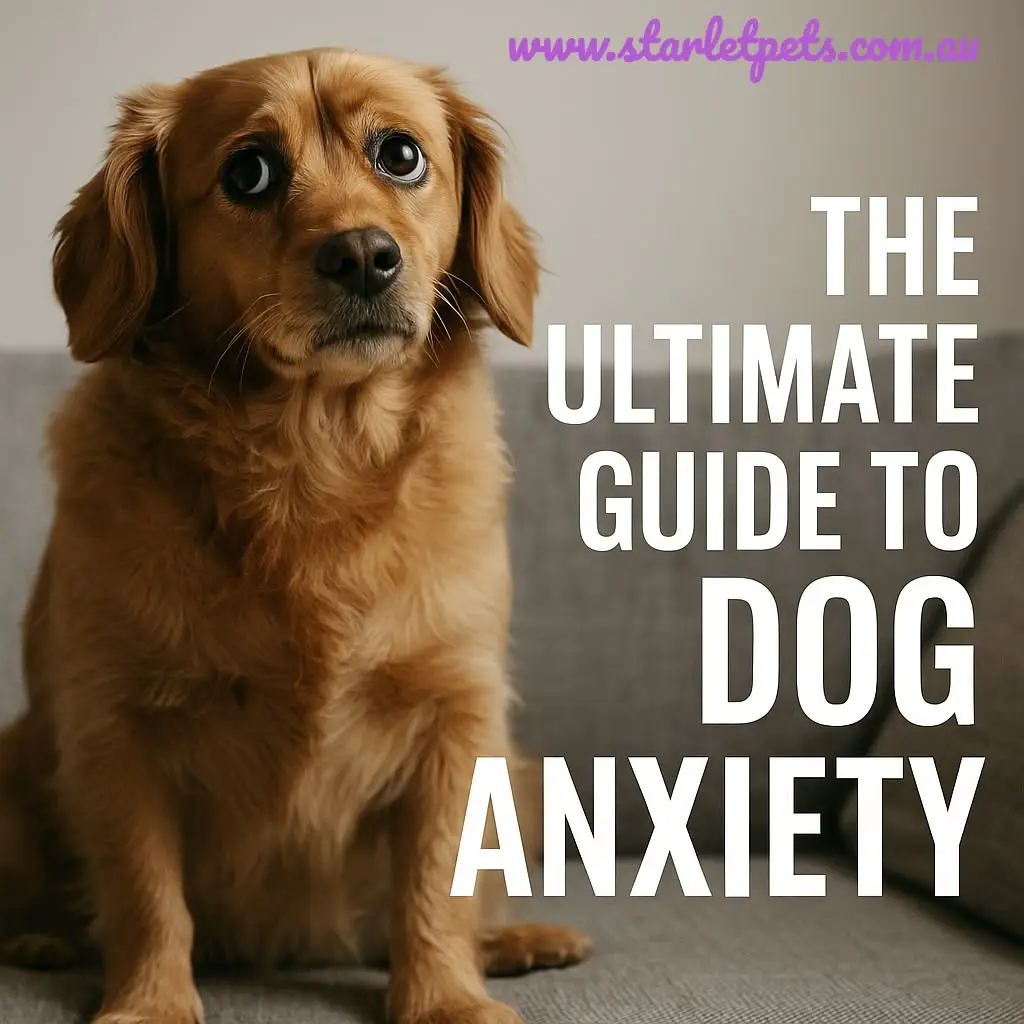
This one surprises a lot of people. Aggression is one of the dog anxiety symptom that often gets misread as dominance or bad temperament. But in many cases, a dog that snaps, growls, or lunges is doing so out of fear. Fear-based aggression is one of the more serious dog anxiety symptom because it can be dangerous — and it almost always gets worse without intervention.
8. Loss of Appetite
An anxious dog often loses interest in food. If your pup turns away from meals they normally wolf down, especially in new environments or after a stressful event, appetite changes are dog anxiety symptom that signal their stress response has kicked in hard enough to override even their hunger drive.
9. Yawning, Lip Licking, and Whale Eye
These are what dog behaviorists call “calming signals” — subtle body language cues that dogs use to express discomfort. Repeated yawning when not tired, licking their lips without food present, or showing the whites of their eyes (whale eye) are quiet dog anxiety symptoms that often get overlooked. Learn to spot them, and you’ll catch stress early.
10. Potty Accidents Indoors
A house-trained dog that suddenly starts having accidents is often dealing with something physical or emotional. Anxiety-related accidents are especially common in dogs with separation anxiety. If your vet has ruled out a medical cause, this belongs on your list of dog anxiety symptom to investigate behaviorally.
11. Compulsive Behaviors
Tail chasing, spinning, excessive licking of paws or surfaces, flank sucking — these repetitive actions are dog anxiety symptom that indicate a deeper, often chronic stress response. They’re the canine equivalent of nervous habits, and they can become compulsive over time if the underlying anxiety isn’t addressed.
Dog Anxiety Symptoms by Trigger
Not all dog anxiety symptoms look the same, and a lot depends on what’s causing the anxiety in the first place.
Separation Anxiety Symptoms
Dogs with separation anxiety typically show their worst dog anxiety symptom in the first 30 minutes after you leave. Signs include:
- Frantic barking or howling
- Destructive chewing near exits
- Indoor accidents despite being trained
- Pacing by windows or doors
- Refusing to eat while alone
Noise Anxiety Symptoms
Fireworks, thunderstorms, construction sounds — noise-sensitive dogs show dog anxiety symptoms like trembling, hiding, panting, and trying to escape. Some will seek you out desperately; others will completely shut down.
Social Anxiety Symptoms
Dogs that weren’t well-socialized as puppies often display dog anxiety symptom around strangers or other dogs. Watch for cowering, tail tucking, whale eye, and avoidance behaviors. Some dogs freeze entirely when overwhelmed.
Travel-Related Anxiety Symptoms
Car rides can bring on a wave of dog anxiety symptom: excessive panting, drooling, whining, and sometimes vomiting. This is partly motion-related, but for many dogs it’s also tied to the unpredictability of where the car is going (hello, vet phobia).

Labrador Retriever Temperament: The Complete & Joyful Guide
How Dog Anxiety Symptoms Differ by Breed and Age
Certain breeds are genetically predisposed to showing stronger dog anxiety symptoms. Working breeds like Border Collies and German Shepherds, velcro breeds like Vizslas, and sensitive breeds like Cavalier King Charles Spaniels tend to experience anxiety more intensely than more independent breeds.
Age also plays a role. Puppies in the socialization window (3–14 weeks) that have traumatic or limited experiences may carry anxiety behaviors into adulthood. Senior dogs, on the other hand, can develop new dog anxiety symptom as cognitive function declines — increased confusion, nighttime restlessness, and disorientation are all signs of age-related anxiety.
When Dog Anxiety Symptoms Become a Medical Concern
There’s an important distinction between normal stress and clinical anxiety. Occasional nervousness in response to a clear trigger is normal. But when dog anxiety symptoms are:
- Occurring daily or almost daily
- Getting progressively worse over time
- Affecting your dog’s ability to eat, sleep, or function normally
- Leading to self-harm like excessive licking that causes sores
…it’s time to talk to your vet. Dog anxiety symptom can sometimes overlap with or be caused by underlying medical conditions — thyroid dysfunction, chronic pain, neurological issues, and hormonal imbalances can all mimic or worsen anxiety. A proper diagnosis rules those out and opens the door to the right treatment plan.
What You Can Do About Dog Anxiety Symptoms
Here’s the good news: dog anxiety symptoms are very treatable. Most dogs see significant improvement with the right combination of behavioral support, environmental changes, and — when needed — veterinary care.
Create a Safe Space
Give your dog somewhere to retreat. A crate with a cozy blanket, a quiet corner, or even just a covered dog bed can dramatically reduce dog anxiety symptom by giving your dog a predictable safe zone they control.
Establish Consistent Routines
Anxiety thrives on unpredictability. Dogs that know when they’ll eat, walk, and sleep tend to show fewer dog anxiety symptom than dogs with chaotic schedules. Consistency is genuinely one of the most underrated tools for anxious dogs.
Desensitization and Counter-Conditioning
This is the gold standard for treating fear-based dog anxiety symptom. It involves gradually exposing your dog to their trigger at a low level while pairing it with something positive — like treats or play. Over time, their emotional response to the trigger changes. It takes patience, but it works.
Exercise and Mental Stimulation
A tired dog is a calmer dog. Regular physical exercise and mental enrichment (puzzle feeders, sniff walks, training games) burn off the nervous energy that amplifies dog anxiety symptom. This alone won’t cure anxiety, but it’s an important piece of the puzzle.
Calming Aids and Supplements
There are several evidence-backed calming tools that can help with mild to moderate dog anxiety symptoms:
- Adaptil (DAP diffusers/collars) — synthetic dog-appeasing pheromone, helpful for many dogs
- Thundershirts — compression wraps that reduce anxiety symptoms in some dogs
- L-theanine and melatonin — natural supplements with mild calming effects
- Zylkene (alpha-casozepine) — a milk protein derivative with good research behind it
Always check with your vet before starting any supplement.
Veterinary Intervention
For more severe dog anxiety symptom, your vet may recommend prescription medication. Options like fluoxetine (Prozac), trazodone, or clomipramine are commonly used — and for many dogs, they’re genuinely life-changing. Medication doesn’t sedate your dog; it lowers the baseline anxiety so that behavioral training can actually take hold.
Working with a certified applied animal behaviorist (CAAB) or a veterinary behaviorist is also worth considering for complex or severe cases.
A Quick Word on What NOT to Do
Well-meaning owners sometimes accidentally make dog anxiety symptoms worse. Here’s what to avoid:
- Don’t punish anxious behavior. A dog that’s already scared doesn’t need another reason to feel unsafe. Punishment increases anxiety — always.
- Don’t force exposure. Throwing a noise-phobic dog into a loud environment to “get them used to it” is flooding, not desensitization, and it typically backfires.
- Don’t ignore the signs. Dog anxiety symptom don’t usually resolve on their own. The earlier you intervene, the easier it is to turn things around.
- Don’t over-coddle. There’s nuance here. Comforting a scared dog is fine — you can’t reinforce fear with kindness. But becoming so protective that your dog never learns to self-regulate doesn’t help either.
Recognizing Dog Anxiety Symptoms in Real Life: A Quick Reference
Here’s a fast-reference list of dog anxiety symptoms so you can bookmark it and come back when you need it:
Physical signs: Trembling, excessive panting, drooling, dilated pupils, tucked tail, ears pinned back, raised hackles, yawning (out of context), lip licking
Behavioral signs: Barking, whining, howling, destructive chewing, pacing, hiding, trying to escape, potty accidents, appetite loss, clinging, avoidance, aggression
Compulsive signs: Tail chasing, repetitive spinning, excessive paw licking, flank sucking
Final Thoughts
Living with an anxious dog can be hard — for both of you. But recognizing dog anxiety symptoms is the first real step toward helping your dog feel better. Once you know what to look for, you stop seeing “bad behavior” and start seeing what’s actually going on: a dog that’s struggling and reaching out the only way they know how.
The good news is, you noticed. And noticing is everything.
Whether your dog shows mild, occasional dog anxiety symptoms or something more severe and daily, there’s a path forward. Talk to your vet. Connect with a behaviorist if you need to. Make your home a place where your dog feels genuinely safe. Small, consistent changes compound into big results — and most anxious dogs, with the right support, go on to live happy, relaxed lives.
Your dog trusts you completely. That trust is your greatest tool.








Post Comment